Channeling Jewish History Blog (where it all began....)
לְמַעַן יֵדְעוּ דּוֹר אַחֲרוֹן בָּנִים יִוָּלֵדוּ יָקֻמו וִיסַפְּרוּ לִבְנֵיהֶם -תהילים עח
That the generation to come might know them, even the children that should be born; who should arise and tell them to their children- Pslams 78
Sunday, February 06, 2022
What happened to the Sephardic community in German Danzig in the early part of the 17th century?
Ashkenazim and the Sephardic Pronunciation of Hebrew (the "lost" second installment).
This post will continue on theme of a previous post where I discussed how Chassidim switched from the Ashkenazic rite to a modified Sephardic rite.
Rabbi Nathan Adler of Frankfurt, Germany (one of the mentors of Rabbi Moses Sofer known as the Chatam Sofer) was another Ashkenazic Jew who switched from nusach ashkenaz to nusach sefard under the influence of Lurianic Kaballah. However- unlike the Eastern European Chassidim- he also switched to the Sephardic pronunciation of Hebrew (H.Z. Zimmels hypothesized that the Chassidim did not switch to the Sephardic pronunciation because it would have been too difficult for them. Adler reportedly had a Sephardic scholar living in his house for over a year in order to teach him the "proper" pronunciation of Hebrew see here).
Adler's "Sephardic minyan" at his home and his Kabbalistic proclivities earned him not a few enemies. He was reviled and castigated by a large portion the Jewish community of his native city leading to his eventual excommunication. He lived as an outcast until shortly before his death.
In the last 2 decades of the 18th century, concurrent with the rise of the hassidic movement in eastern Europe, a pietist group was emerging in germany. It was led by Rabbi Nathan adler of Frankfurt . He was a controversial figure in the Frankfurt Jewish community and he was excommunicated by the community in 1779 and 1789. Rabbi Nathan’s followers regarded him as a man of god miracle worker. Under his influence they studied kabbalah, demanded extreme stanards of abstinence and self purification…they conducted separate prayer service according to a special rite based on the prayer book of Rabbi Yitzchak Luria, the Ari. The hostile sources were compiled and published in a booklet entitled maaseh tatuim a copy of which I have in my collection.
Dubnow doubted the existence of a direct link between the formation of adler’s circle and the emergence of Hasidism, and most other scholars who have considered the question agree. Some reconsideration of this position is now required, as the scholarly world has recently revised its view of the spiritual nature of early hassidism and embarked on a new assesement of its religious and social features. The new approach ..studies the beginning of hassidism in the context of the religious awakening then taking place in the world of kabbalistically oriented pietistic groups active in 18th century Europe. We are therefore justified in attempting a reassesment of the link between the different manifestations of religious pietism ppearing at the same time in eastern and central Europe. The Frankfurt pietist circle and the hasidic groups in eastern Europe were established at approximately the same time-the early 1770s; both trends looked to the same sources for inspiration and sought to create a new ritual expression for new spiritual currents; both used the Hebrew term hasidim; they recognized the power of charismatic leaders and their authority to innovate new practices and there was a striking similarity between the two in prayer rites and other customs as well as in the nature of their deviations from accepted norms in their respective communities. The accusations against adler included the complaint that they introduced substantial changes in both the text and the conduct of prayers.Most frequently they were accused of using the Sephardic prayer rite known as siddur haari, using the Sephardic pronunciation in prayer P.9
See Hatam Sofer, Responsa, Orah hayyim, para. 15: “therefore my master, the wise, pious, and priestly Nathan Adler, f blessed memory, he would himself lead the services and pray in Sephardic pronunciation from R’ Yitzchak Luria’s prayer book.” Cf. Abraham Lowenstein of Emden, Responsa zeror ha-hayim, Amsterdam 1820, sec,. “U-neginotay yenaggen”: “As to what has been testified of the unique sage…R’ Nathan Adler in Frankfurt, that he too used to pray in the Sephardic pronunciation , I too know this….And heard him pray in the Sephardic pronunciation and apart from that…R’ Nathan was at that time quite alone in his usage, counter to all the great authorites of that time in Frankfurt a.M., and noone ruled like..the aforementioned R’ Nathan but prayed in the Ashkenazic accent as we do.” According to Adler’s biographers, he had learned the Sephardic accent in his youth from a Jerusalemite visitor to his home. Derekh Hanesher p. 22 in paper p. 31
The Jewish Enlightenment Looks to Sepharad as a Positive Model
The literature abounds on the subject of the Reform movement in Germany using Sephardic Jewry as a positive model of what progressive Jewry ought to look like. Interest in all things Sephardic were all the rage among the wissenschaft crowd in Western and Central Europe [1] The literature abounds on the subject of German reform Jews attempting to recreate the "Sephardic model" however many of these scholars (see footnote1) fail to point out that this fascination and admiration for all things Sephardic among German Jews predates the reform movement and is related to the popularity of Lurianic Kabbalah and the "rediscovery" of the works of old Spanish Kabbalists.
From the late 18th century, Sephardim throughout Western Europe, as well as Ashkenazim, deployed the myth to promote their own cultural, political and social agendas...the pioneers of Wissenschaft des Judentums and the leaders of the Reform movement constructed an image of Sephardi Judaism that stressed its cultural openness, philosophical rationalism, and aesthetic sensibilities in order to criticize what they disliked in their own traditions, i.e. its backwardness, insularity, aversion to secular studies. In France, Austria, Germany, Hungary and the United States, communal and congregational boards erected imposing synagogues of so called Moorish design, assertive symbols of their break with the “unenlightened” Ashkenazi past.
Before the end of the century, the myth of sephardi superiority was widely disseminated and available for appropriation by Jews and their enemies alike…in their battle against racial myths about jewish deformities, jewish anthropologists drew on the Sephardi mystique to create a countermyth of their own- that of the well-bred, aesthetically attractive, physically graceful Sephardi, a model of racial nobility and virtue. In their work John efron notes, “the Sephardi served as the equivelant of the Jewish ‘Aryan’…the physical counterpart to the ignoble Jew of Central and Eastern Europe.
Todd endelman pp. 31-32
With the advent of emancipation in central Europe, German speaking Jews gradually unhinged itself from the house of Ashkenazic Judaism. Inclusion in the body politic sundered a religious union born of common patrimony. Historians have tended to focus on the institutional expression of this rupture-the repudiation of the educational system, the mode of worship, and the Rabbinic leadership intrinsic to Ashkenazic Judaism- with special emphasis on the western tastes and values with propelled the transformation of all areas of Jewish life…with surprising speed German Jews came to cultivate a lively bias for the religious legacy of Sephardic Jewry forged centuries before on the Iberian Peninsula without which they would have cut loose from Judaism itself…..enabled them to redefine their identity in a Jewish mode.
Schorsch p. 71
..there is little doubt that beyond the worldwide influence of Lurianic Kabbalah, the religious culture of Spanish Jewry held but slight allurement for a self-sufficient and self-
Confident Ashkenazi Judaism in its age of spiritual ascendancy.
Schorch p. 72
Nafatali herz wessely, whose admiration for the Sephardim of Amsterdam was born of personal experience, had contended in the fourth and final letter of his Words of Peace and Truth that the Sephardic pronunciation of Hebrew was grammatically preferable to the manner in which the Ashkenazim rendered it. A generation later, the teachers and preachers who pioneered the development of a German rite adopted the Sephardic pronunciation for their “German synagogue”. Not a point of Hakachic contention, the switch could be defended by Eliezer Liebermann in terms of grammatical propriety or by Moses Kunitz of Ofen (buda) in terms of demography- more than seven eighths of the Jewish world offers its prayers in the Hebrew of the Sephardim but the ultimate motivation of this unnatural and self conscious appropriation of Sephardic Hebrew was the desire to extinguish the sound of the sacred tongue from that of Yiddish, which these alienated Ashkenazic intellectuals regarded as a non-language that epitomized the abysmal state of Jewish culture.
Schorsch 77
Mayer Kayserling born in Hanover in 1829, he eventually became the liberal rabbi of Budapest and his generation’s leading scholar on of Sephardic Jewry. In his work entitled Sephardim: Romanische Poesien der Juden in Spanien…according to kayserling, persecution had not destroyed the aristocratic bearing, the cultural loyalty, the linguistic purity, and the alliance of religion with secular learning that had distinguished Sephardic Jewry.
Schorsch 85
It should be noted that the close resemblance in pronunciation between the biblical Hebrew taught at German universities of the time and the Hebrew of the Sephardim no doubt bestowed a verisimilitude of correctness of the latter. ..In a most interesting letter dated 4th October 1827, J.J. Bellerman, a well known theologian, scholar and director of the prestigious Berlin Gymnasium advised Zunz to teach the youngsters in the Jewish communal school over which Zunz presided the Sephardic pronunciation of Hebrew from the very beginning. Bellerman had been invited to observe a public examination of the children. While expressing his pleasure at the event, he did see fit to challenge the retention of the “Polish pronunciation of Hebrew,” because it managed to offend both the vowels and accents of the language. And in conjunction with the vowels, he pointed out the historical superiority of Sephardic Hebrew,
As you well know the writings of learned Alexandrian Jews—in the Septuagint, Josephus, Philo and Aquila- show that the Polish pronunciation is incorrect…the learned Portuguese, Spanish, French and Italian Jews have the correct one. Why shouldn’t the Jews of Berlin and in fact of Germany choose the better (of the two)? Especially Berlin Jewry which has already adopted so much that is correct? It would indisputably accrue to their honor, if they would offer other communities in this matter an example.
Quoted in schorch p. 89-90
Some Ashkenazi rabbis were actually of the opinion that praying with the Sephardic pronunciation rendered the prayers null. The latter were particularly incensed by the failure of the sephardim to distinguish between a patach and a kametz [2]. (the Chazon Ish held that the Sephardim mispronounce gods name and it should be adoinoi [as in oy] rather than adonay [as in aye].
Zionism and the Rebirth of Hebrew
Eliezer ben Yehuda was impressed with the pronunciation of the Sephardi community in Palestine and their pronunciation was adopted but not without controversy. The poet Yehoash mentioned how strange the Sephardic Hebrew sounded to him when he settled in Rechovot shortly before World War I. In 1890 he helped create the Hebrew Language Council ( Va'ad Ha Leshon Ha Ivrit) whose stated purpose was to disseminate works in Hebrew and establish Hebrew as the official language of the Yishuv.
Although modern Hebrew is similar to the Sephardic pronunciation, it isn’t exactly alike. For instance, Sephardic Hebrew differentiates between an ayin and an alef, as well as between a chet and a khaf while modern Hebrew does not do so in both cases.
During Ben Yehudas visit to Morroco, he met a maskil by the name of Abraham Moshe Luntz who conversed with him in Sephardi-accented Hebrew and informed him that this was the language that united the various different communities in the yishuv. Ben-yehuda Hahalom veshivro 11
Subsequently after that meeting ben yehuda sailed to Palestine where he settled in the Jewish quarter of old Jerusalem.
Although ben –yehuda was not a religious Jew, he dressed as a traditional Sephardic jew, grew a beard and regularly attended the local synagogue hahalom veshivro 107
It wasn’t long however until he managed to arouse the ire of the Jerusalem Sephardic rabbinate who responded with 3 seperate bans against his and his his newspaper “Hatzvi”.
Ben yehuda particularly disliked the Sephardic chief rabbi yaakov shaul elyashar because he considered him be from the old generation of jews who were stuck in the galut mentality. He did however form close ties with elyashar’s succesro, Yaakov Meir who was highly sympathetic to ben yehuda’s ambitions ad the former was instrumental in introducing the modern Hebrew language into the schools of the Sephardic community in Jerusalem. Ben yehuda, devorah Hayav umifalo pp. 47-48
Ben yehuda’s close friend david yudilevitz describes how the rewners of the Hebrew language discussed the practiality of introdcing modern Hebrew as the lingua franca of the residents of the yishuv:
On the outskirts of Jerusalem, a group of maskilim gathered and discussed their vision of how to make the dry bones live again:
“To revive the language, very well, but how shall we go about it” the elder of the group began.
“very simple, all the schools will be established and those that are already in existence are incumbent to teach the Hebrew language as a living language. The students will be obligated to converse only in Hebrew whether they are in schoolm at home and in the synagogue
His disciple joseph klauner writes that the reason ben yehida chose the Sephardic pronunciation was because this was the pronunciation used by Christian when transliterating the ancient Hebrew names into their own languages see klausner, joseph Mifal hayyav.
A meeting of the Hebrew Teachers Association in 1895 adopted Hebrew as the language of instruction, with Sephardic pronunciation to be used (but Ashkenazic pronunciation was allowed in the first year in Ashkenazic schools, and for prayer and ritual). The next meeting of the association was not until 1903, at the closeof a major convention of Jews of the Yishuv called in Zikhron Yaakov by Ussishkin, the Russian Zionist leader. The 59 members present accepted Hebrew as the medium of instruction…and there was general agreement also on the use of Ashkenazi script and Sephardic prounication.
Language and the state: revitalization and revival in Israel and EireBy Sue Wright p. 14
The Ashkenazic/Sephardic pronunciation debate accompanying the establishment of modern Hebrew in the early 20th century is described by Morag, 1993. Aviva Ben-Ur (2009) has provided a detailed account of the transition from Ashkenazic to Sephardic pronunciation in many educational settings during the twentieth century (see also Cohen 2006: 187-8, 190).
As Raphael Patai shows, however, “Sephardic” Hebrew pronunciation, as a blanket term for Israeli Hebrew pronunciation, serves largely as a misnomer that neither reflects the diversity of Hebrew pronunciation among Sephardic jewish populations, nor derives dierectly from them. Nonetheless, the Israel-focused concept of “Sephardic pronunciation” has come into common usage at HebrewUnionCollege and elsewhere
…most essential differences involved systematically replacing many [s] sounds with [t] and many [aw] sounds with [ah].
The Making of a Reform Jewish Cantor: Musical Authority, Cultural InvestmentBy Judah M. Cohenp. 265
Jack Follman quotes the noted linguist Dr. Haim Blanc: “for various reasons, they decided to adopt the pronuniciation in vogue among Mediterranean and Middle Easten (Sephardic) communities, but which one of the several Sephardic varieties was actually used as a model is obscure…”
Blanc offered the following reasons among others for this change:
1. The Sephardic variety was already in use as the pronunciation of the Market Hebrew lingua franca of Palestine, and was used even by the Ashkenazim in their face to face dealings with the Sephardim for almost 4 centuries prior to ben-yehuda.
2. The Sephardic variety was considered the more ancient of the two, as testified in particular by various transliterations and translations of Hebrew into Latin and Greek, and therefore was considered closer to the original ancient biblical Hebrew of the homeland. A further point was the fact that the Sephardi variant was considered closer to the historical dialect of Judah, the home of Judaism, whereas the Ashkenazic form was thought to be similar to that of secessionist Samaria.
3. The Ashkenazic variety of Hebrew reminded the council too much of Yiddish, the despised language of the exile in the opinion of most of the council’s members, which, in particular contained the same set of vowel phonemes. Conversely, the Sephardic form resembled the sound pattern of Arabic more closely and Arabic was the sister language in the semitic family which already existed in the locale.
4. The Sephardic variant reproduced the consonantal text of Hebrew more accurate that did the Ashkenazic, as it included at least four more graphemic-phonemic renditions, as mentioned above. Therefore it was considered the more correct of the two by the council, who still conceived of Hebrew more in its written image than in its spoken form.
5. It was the council’s opinion that children who knew the Sephardic system would be equipped to read and write Hebrew texts with greater facility since the Sephardic system resembled the consonantal text more closely. Since children were to be the chief carriers of the language revival, this was an important factor. (However as Hebrew is generally written only in its consonantal shape, the fact the Ashkenazic and not the Sephardic system was closer in vocalization to the vocalized Hebrew text was never given serious attention, although Yellin did mention it at least once in his work, at his lecture on the subject to the Secondary and Grammar School Teachers Union Conference in Gedera in 1904. This step was later to lead to serious problems in the teaching of Hebrew vocalization.)
6. The Sephardic system is closer to the internal grammatical structure (morpho phonemics) of Hebrew than the Ashkenazic system, and had been the system already in use among the European Hebraists as well as in Hebrew grammars. In this sense, it may be said that the Sephardic variety had more codification and thus more prestige than the Ashkenazi variety.
The revival of a classical tongue : Eliezer Ben Yehuda and the modern Hebrew language by jack fellmanpp. 84-85
…the golden age in Spain, was especially cherished by Ben-Yehuda who called it “this most fruitful period”
Ibid p. 77
--
..the Sephardim as a whole were less inclined to religious fanaticism and more receptive to new ideas from the outside world. This fact can be attributed to various sources. First, unlike the Ashkenazim, the Sephardim had never been directly exposed to the new climate of thought as expressed in the ideas of the enlightenment which were sweeping across Europe during the 19th century and therefore did not recognize as deeply the possible anti-traditional, anti-religious consequences of these beliefs.
Ibid p. 29
…Moreoever, regarding one fundamental aspect of his dream, and for our purposes the most important one, ben Yehuda had at his disposal spoken Hebrew material to work with from the outset. Indeed his choice of Jerusalem as the center of operations throughout the whole period of the revival may be attributed to this very factor. It is known from historical records and had also been clear to Ben Yehuda before his arrival in Palestine that these various Jewish groups while speaking their own languages among themselves, used Hebrew as a lingua franca when it became necessary to meet together, for example in the market place, or to work together, as in the collection of taxes for the government authorities. This situation was particularly applicable to the 2 major sections of the community- Ashkenazim and Sephardim- when they met together, but was also the case when groups consisting only of Sephardic Jews gathered, as these people had no other common means of communication but Hebrew, since Ladino was restricted in use and Arabic was aplintered into several dialects. As ben Yehuda observed: “When for example a Sephardi from Aleppo would meet a Sephardi from Salonika or a Sephardi from Morroco would come into the company of a Jew from Bukhara, they were obliged to speak in the holy tongue… of all the centers of Jewish population in the world only Jerusalem could boast a spoken Hebrew tradition which had been preserved until Ben Yehuda’s time. As ben yehuda noted: “for me the matter was a little easier, because the Sephardim who knew I was not a Sephardi were already used to the fact that with an Ashkenazi they must speak in Hebrew. As for the Ashkenazim, some of them did not know who I was, and the question whether I might not be a Sephardi made it acceptable to them to speak with me in Hebrew.
This Hebrew was not, of course, the Ashkenazic (European) Hebrew hat Ben Yehuda had learned in his youth. In the first place, it was a Hebrew spoken with the Sephardic accent, inasmuch as the Sephardim were numerically and culturally superior to the other groups in Jerusalem and had enjoyed this status for over 300 years and therefore their accent too had become dominant….It should also be borne in mind as a factor initially aiding Ben Yehuda and his ideal that certain groups of Jews in Palestine already spoke only Hebrew, in particular Kabbalists and Hassidim especially in safed, at least on Sabbaths, but also, it would seem, on weekdays.
ibid, 30-31
----
Ben did more than restructure the syntax, vocabulary and grammar of an ancient tongue. He challenged the dominant Orthodox community of late nineteenth century Jerusalem by seizing its linguistic patrimony and harnessing it to the needs of modernity. By creating new words for new realities, he challenged the Orthodox community in its own sacred language to name the new world around them. By naming that worlds in the language of their prayers, he provided a dangerous bridge between the walled city of Orthodox belief and the secular nationalists now landing on Palestine’s shores. In the end Modern Hebrew captured Jerusalem well before Zionism did. In 1904, Ben-Yehuda published the first part of hos modern Hebrew dictionary. At that time, there were fewer than ten Hebrew-speaking familieis in all of Palestine. Yet in 1917, the British declared that the 3 official languages of manadatory Palestine would be English, Arabic and Hebrew.
To rule Jerusalem
By Roger Friedland, Richard D. Hecht p. 58
the aforementioned jacob falk
paper on Rabbi Nathan Adler
Rabbi Nathan Adler of Frankfurt (1741-1800), author of Mischnat Rabbi Nathan (Frankfurt am Main [Papdam], 1862), available here, who was the rebbe of the Hatam Sofer, about whom see Rachel Elior, "Rabbi Nathan Adler and the Frankfurt Pietists: Pietist Groups in Eastern and Central Europe during the Eighteenth Century," Zion 59 (1994): 31-64 (Hebrew), available here; idem, "Rabbi Nathan Adler of Frankfurt and the Controversy Surrounding Him," in Karl Erich Grozinger and Joseph Dan, eds., Mysticism, Magic and Kabbalah in Ashkenazi Judaism: International Symposium Held in Frankfurt a.M. 1991 (Berlin & New York, Walter de Gruyter, 1995), 223-242, available here; and idem, "Rabbi Nathan Adler and the Frankfurt Pietists: Pietist Groups in Eastern and Central Europe during the Eighteenth Century," in Karl Erich Grozinger, ed., Judische Kultur in Frankfurt am Main, von den Anfangen bis zur Gegenwart (Wiesbaden: Harrassowitz Verlag, 1997), 135-177, available here.
Controversy in Hungary
Hungary never had a strong tradition of pronouncing the prayers in the sephardi pronunciation. Hartwig (Naphtali Hirtz) Wessely (1725-1805). who initiated the reform of Hebrew pronunciation, referred precisely to the fact that the Sephardi people read out every phonetic symbol, even semitones of traditional texts, clearly, and claimed that their language sounded nicer nicer than the Ashkenazi reading. In Hungary, Joszef Rajnis (1741-1812), a Jesuit teacher and poet, made a similar statement with an offensive anti-Semitic overtone. In his opinion the accent ("barking" as he called it) of rabbis differed significantly from the original sounds of the ancient Jewish language. Ashkenazim prnounced a few letters differently from the Sephardim, and there are numerous prevalent Ashkenazi accents as well: besides the received standard Ashkenazi of the Rabbinical seminary, several of them are being used today in Budapest.
In the “high Ashkenazi” ,for instance, o is said instead of a and au instead o, and in certain positions, like at the end of a word, the letter tav is pronounced as an s instead of a t. They also stress syllables differently. Thus the first words of the bible are read Bereshit bara Elohim in the Sephardi and Boreishis boro Elauhim in the Ashkenazi pronunciation…In Hungary there was an attempt to introduce Sephardi pronunciation already in the 19th century. Following German examples, it was Moses ben Menachem Kunitz (1774-1837) of Obuda, the Rabbi of the Buda community from 1828 until his death, author of some valuable Talmudic works, a Zohar analaysis, (ben Yohai, 1815), and even a drama in Hebrew verse (Beit Rabbi, 1805), who in 1818 published a Rabbinic decision (pesak) which announced that the Sephardi pronunciation should be used in the synagogue instead of the Ashkenazi one. His main argument was that seven eighths of the world’s Jews prayed using the Sephardi pronunciation (this figure was obviously exaggerated). Kunitzer was in favor of reforms in general; he even supported the efforts of Aron Chorin. He studied in Prague and was held in high esteem.
The activity of Kunitzer had no real result, but in spite of its failure, it indicates that representatives of the haskalah were unanimously convinvced that the Sephardi pronunciation preserved by certain isolated Jewish groups throughout centuries, was closer to the original sound of the Hebrew language than the Ashkenazi one, the common language of European Jews altered under german influence. JEWISH BUDAPEST PP. 457-458
In the first half of the 19th century, when various movements called for the reformation of Jewish life were developing, the Sephardi culture seemed a real alternative to for Ashkenazi jewry. It appeared to be a means to overcome the Asheknazi heritage which they regarded as backward…In contrast with the 16th century..at that time Ashkenazi culture enjoyed higher status, since Ashkenazi jews had not converted to any other religion, had bnot become marranos. Around 1500 when the first scholarly Hebrew grammar books were published in Europe, the authors naturally took the language of Jews living in France and Germany, that is Ashkenazi Hebrew , as the basis of their work, and sephardi was regarded as a curiousity. In the epoch making grammar book (De rudimentis Hebraicis, 1506) of Johannes Reuchlin (1455-1522), Ashkenazi Hebrew was the living language. It was only in the 17th century that European Hebraic scholars- the so called “Christian Hebraists”, decided in favor of Sephardi reading. It was accepted by the great grammar (1817) of William Gesenius (1786-1842) as well, which formed the basis of modern Hebrew linguistics. Since the 17th century everyone considered the Sephardi usage to be the scholarly stanadtard and used it exclusively. Jewish scholarship (wissenshacfat) was now committed to Sephardi, and it became the ideal for the initiatives of the Reform movements. Those German jews who wished to be emanicated and integrated into the non-jewish environment definitely strove to be different from their “backyard” Ashkenazi co-religionists.They wanted to leave out the verses (piyyut) that originated from the medieval german enovorment from the ritual and prayer book since these remained alient to the Sephardi world... Despite all these efforts, the Sephardic pronuniciation was not accepted by the moderately reform-minded Jewish public of Pest, neither when Kunitzer suggested it nor along the practice of the “Central Reform Association”.
Jewish Budapest pp. 459-460
…In the 1950s, the leadership of the Hungarian jewish community strictly forbade the Sephardi pronunciation which sounded similar to Modern Hebrew. It was even forbidden at the Rabbinical Seminary, lest they be accused of Zionism and thus invite political or police intervention. Those who study Hebrew these days may learn both pronunciations, yet the attraction and impact of the Israeli intonation is powerful. In Synagogues, the Ashkenazi pronunciation is still in use, but younger people, including students of the Rabbinical Seminary, switch to the Sephardi-Israeli reading they became accustomed to during their stay in Israel.
Ibid p. 461
Mayer Kayserling (1829-1905) a german born historian and Rabbi of Budapest. He is best known for his pioneering studies of the history of the Sephardim and crypto-jews. In his works, Kayserling betrays an unmistakable pro-Sephardi bias, contrasting the “lowly” language and manner of the Ashkenazic Jew with the “nobility of character” and “purity of the language” of the Sephardic Jew. He also naturally felt that the Sephardic pronunciation of Hebrew was the correct one.
Quoted in efron scientific racism pp. 86-87
Notes:
1. see for instance Ismar Schorsch, "The Myth of Sephardi Supremacy," reproduced in his From Text to Context: The Turn to History in Modern Judaism (Hanover, N.H., 1994), (also in Leo Baeck Institute Year Book 34),
Benjamin Disraeli and the myth of Sephardi superiority Journal Jewish History Issue Volume 10, Number 2 / September, 1996
The Noble Sephardi and the Degenerate Ashkenazi,
2. see for instance Meshichei Hasheker Umitnagdayam by Benyamin Hamburger regarding the early 18th century false messiah Löbele Prossnitz.
v’tzivanu al Sefiras HaOmer...” (pause) “Hayom shnayim
v’arba’im yom shehem shishah shavuos baOmer (Today is
42 days, which are six weeks in the Omer)...” My grandfather
then closed his eyes and shortly thereafter returned his
neshamah to his Creator.
May we all be zocheh to have an appreciation such as his
for the mitzvah of Sefiras HaOmer.
* MYA subsequently moved to Edison, N.J., and was later renamed the Rabbi Pesach Raymon Yeshiva. Several thousand Jewish children received their Torah education at the yeshivah my grandfather founded 74 years ago.
The Strange Case of the Sephardi “Baal Shem” From Poland
The portrait of Rabbi Shmuel Yaakov Falk (1710-1782) known as the “Baal Shem of London” is often confused with that of Rabbi Israel ben Eliezer, the Baal Shem Tov and founder of the Chassidic movement.
Former Chief Rabbi of Great Britain Rabbi Dr. Herman Adler (1839-1911) wrote several fascinating biographical sketches of Rabbi Falk for the Transactions of the Jewish Historical Society of England. When perusing his papers he was surprised to find that Falk referred to himself in his diary as “the son of Raphael the Sefardi.” Initially Adler prudently pointed out that the term “Sephardi” was often used by and for the (then) newly emerging sect of chasidim who were often called “Sephardim” or “Anshei Sfard” (because they prayed in a modified Sephardic rite). Although initially reticent, in a later republishing of the same article, Adler provides more clues as to the origins of Falk. This time no mention of a possible Chassidic connection is made. Adler merely wonders, “It is unclear why and how he [Raphael the Sephardi] received this appellation [Sephardi]. Had he immigrated from Spain or Portugal?” and adds that “Falk’s Sephardic pronunciation of Hebrew may have been due to his parentage.” Additional evidence seems to bear this out. In the comment on that passage, Adler writes that Falk gave his name in his commonplace book as חיים שמואל יעקב דפאלק טרדיולה לנידו (Chaim Shmuel Yaakov de Falk Tradiola Laniado) and wonders whether he might possibly be related to the Laniados, a Sephardic family that settled in Italy and the Middle East. The answer seems to be in the affirmative.
Falk’s personal assistant was a Polish Jew by the name of Zvi Hirsch of Kalisch (parenthetically, Kalisch’s descendants later anglicized their name to Collins and assimilated into British gentility) kept a personal journal where he described his master’s daily activities and magical experiments. The journal is an intimate window into Falk’s life; it describes Falk’s frequent quarrels with his wife. One entry records an incident where he wanted to throw a dish of food at her, saying it was cooked so badly that any Sephardi who tasted it would laugh outright…
Falk’s unlikely Sephardic ancestry is also briefly mentioned in the recently published book by Michal Oron, Rabbi, Mystic, or Impostor (which is an english translation of an earlier work published in 2003): “his father, Rabbi Joshua Refael the Sephardi, was apparently descended from a Spanish New Christian family which having arrived in Poland in the 16th century, returned to Judaism…Falk is also the name of a family of distinguished lineage that included Rabbi Joshua ben Alexander Falk, author of Sefer Mitzvot Aseh [this looks like an error and should read Sefer Meirat Einayim] and Rabbi Jacob Joshua ben Zvi Hirsch, author of Penei Yehoshua”.
Oron’s translation and annotation of Falk’s diary (Liverpool University Press, 2020), is a fascinating window into the lives of both Falk and his associates. Oron maintains that Falk was “probably born in Podhajce (then in Poland, now in Ukraine)”. While there is no proof that Falk was a Sabbatean, he was close friends with the famous Sabbatean, Moses David of Podhajce who stayed at his home in London for a brief period.
Falk’s family had initially relocated from Poland to Furth in Germany where Samuel began practicing practical Kabbalah. This led to his eventual arrest where he was charged by a court in Westphalia with practicing black magic. He was sentenced to death but managed to escape to London.
There Falk established himself as a miracle worker and a sort of folk healer. Both Jews and many Christians-especially from the upper class visited him. The German count Von Rantzow mentions meeting Falk in his memoirs. He characterized Falk as “a renowned prince and High Priest of the Jews”. He mentions that his father had told him that Falk considered himself “to be a scion of the line of King David”. Rantzow also provides a possible clue as to Falk’s background when he claims that when Falk fled Germany, he went to England “where the Portuguese Jews received him as their prince and supreme leader”.
As we shall see, that statement is certainly not factually true; Falk, when given the opportunity to do so, refused to become a member of any of London’s Jewish congregations. Oron correctly characterizes “his aversion to communal factionalism and his unwillingness to belong to any ethnically defined community”. Yet at the same time, Falk eventually became one of England’s greatest philanthropists and left very generous bequests for both the Sephardic and Ashkenazic communities of London.
Falk’s aforementioned diary was examined by the author who described it as consisting of 59 folio pages, mainly in Hebrew, and mostly written in Spanish Rabbinic script. Before Oron’s publication of it (initially in Hebrew, by Mossad Bialik, 2003), the diary had never been published in its entirety. It contains an eclectic collection of recordings of events, recipes for cakes, remedies (one of his recipes involves melting bone marrow along with butter and other ingredients to make plaster. This seems to be in contravention to the laws against mixing milk and meat which perhaps lend credence to those who would cast him as a Sabbatean. Parenthetically, Kalisz’s diary has a cure for epilepsy which involves burning an owl and eating the ash), and Kabbalistic formulae and more.
As mentioned before, Falk’s personal assistant, Tzvi Hirsch of Kalisz likewise kept a diary. One tragicomic excerpt from that diary paints a portrait of someone who was at least partially acculturated into the Ashkenazic world. Apparently Falk was very fond of his kugel (a traditional Ashkenazic dish partaken in honor of the Sabbath meal). On the 12th of Shevat, he lashed out with great harshness at his wife for ruining his favorite kugel..
Someone once quipped to me tongue-in-cheek that the best/most interesting Ashkenazim are/were Sephardim..
While, as mentioned, Falk’s diary is written in Sephardic cursive, some of it was also written in Ashkenazic style. Also of interest is the way he sometimes translated and transliterated words. For instance, he uses the German or Yiddish term kessel to describe coffee and tea and for pasta he used the Yiddish/German word lokshen.
What is also interesting is that several of his disciples and visitors came from Zamosc in Poland (one of them for instance was Ezekiel ben Shalom, a leading Sabbatean). As I’ve written in greater length elsewhere, Zamosc hosted a Sephardic community beginning in the 17th century which apparently lasted in some form for several centuries.
In Falk’s entry for the 23rd of Tevet, he mentioned a letter he sent to one “Solly Nordah”. Oron conjectures that this may allude to Solomon ben Abraham Laniado who was a preacher in Venice in the 17th century. Could this be a Laniado relative with whom he kept in touch?
Also, a list of books that always accompanied Falk in his travels included Sefer Emek Yehoshua, a book of questions and answers on the weekly Torah portions and halakhic matters, by Rabbi Joshua ben Juda Leib Falk who lived in the 17th century. Curiously enough, the author like Samuel was born in Poland [Lviv] where he was a preacher, and eventually relocated to Hamburg, Germany, perhaps this Falk was likewise a prominent relative?
While little reference is made to his father Raphael “the Sephardi”, one entry for the 25th of Nissan is intriguing. He mentions seeing his father in a dream. He refers to him as “R. Joshua Raphael Falker Falk”. Falk continues that “for 35 years I had heard nothing of him…and then he went upstair to my Synagogue..I said to my students ‘Beware of his silence and do not let him deceive you…for none is greater than he is in Torah and in the sharpness of his tongue..”.
All told, Falk’s diaries only add to the complexity of a figure who was undoubtedly anything but conventional. While Tzvi Hirsch claims that he was miserly, Falk in his will left a great fortune to be distributed to the poor as well as to the Sephardic and Ashkenazic communities of London. His bequest was so large that apparently down to the present day, the Chief Rabbi of the UK still receives an annual amount from this endowment in addition to his salary.
Are The Greeks Still Nursing a Grudge Against Jews for Chanukah?
It’s September in Sparta, and the merciless Mediterranean sun beats down on the assembled crowd. The observer picks up a mingling of Greek and Hebrew words and phrases. Pleasantries are exchanged, with promises to keep in touch and strengthen cooperation and friendship and the like. This conference, titled SPARTA-ISRAEL CONFERENCE 2018: Renewing an Ancient Friendship, took place this previous September and was organized by the Greek branch of the fraternal B’nai Brith Organization.
The advertisers of this conference drew on history and current geopolitical realities to encourage an alliance between modern-day Jews and Greeks. The choice of Sparta as the location for this conference may have been deliberate. The brochure reads:
“At about 300 BC, a wise and long-reigning leader, King Areus of Sparta, sent a letter to the High Priests of Jerusalem addressing them as brothers and proposing a friendly alliance between the two peoples. The Areus initiative and ensuing consistent events are recorded in the Book of the Maccabees and the History of the Jewish People by the historian Josephus Flavius. Following the strong and long-standing symbolism of the above, the Sparta-Israel Forum aims to further promote Hellenic-Israeli cooperation within a worldwide horizon and toward the mutual benefit of the two historical peoples.”
What are these mentioned letters all about?
In the ancient Second Book of Maccabees, Chapter 12, verse 20–23 there is an interesting passage:
“Arius, king of the Spartans, sends greetings to Onias (Chonyo), the chief priest. It has been found in a writing concerning the Spartans and Jews that they are a kinsmen, and that they are descended from Abraham. Now since we have learned this, please write us about your welfare. We for our part write you that your cattle and property are ours and ours are yours. So we command them to report to you to this effect.”
Josephus also quotes this letter and also records correspondence between the Spartans and both Simon the Hasmonean and his brother Jonathan.
The current geopolitical realities that are seeing warming ties between the Jewish state and its non-Arab neighbors in the Mediterranean is not without its detractors. Some Greeks are still nursing a grudge against the Jews, it would seem.
In 2014, the Greek Political Party Syriza bumped one of its candidates, Theodoros Karypidis, after the latter alleged that “Nerit”, the acronym of Greece’s new public broadcaster, was derived from the Hebrew word for candle, which he linked to the Jewish festival of Chanukah, which commemorates the struggle of the Maccabees against the Greeks. He then lashed out against the Greek government. “Samaras [the then Greek prime minister] is lighting the candles in the seven-branched candelabra of the Jews,” Karypidis wrote on his Facebook page, adding that Samaras was “organizing a new Hanukkah against the Greeks.”
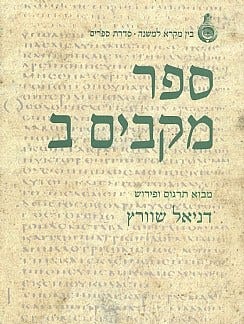
One of the delicious ironies about Chanukah is that the aforementioned Books of Maccabees form part of the Greek Orthodox canon (as well as that of other Christian denominations). This is astounding when one recalls that the Jews did not preserve those books at all (in fact, all current editions are re-translations from Koine Greek. However, it is also important to note that some rabbis — such as the former Sephardic Chief Rabbi of Israel Mordechai Eliyahu — strongly encouraged the reading of the Books of Maccabees on Chanukah).
The Greek Orthodox Church also celebrates a Chanukkah of sorts of their own, the commemoration of the “Maccabean martyrs” takes place on August 1. The Church also considers Antiochus Epiphanes to have been an impious pagan.
As Jon D. Levenson wrote several years ago in an article in the Wall Street Journal:
“And so we encounter another oddity of Hanukkah: Jews know the fuller history of the holiday because Christians preserved the books that the Jews themselves lost. In a further twist, Jews in the Middle Ages encountered the story of the martyred mother and her seven sons anew in Christian literature and once again placed it in the time of the Maccabees.”
It is important to note that paganism and worship of Greek gods did survive in Greece up until modern times. In fact, these modern-day Zeus worshipping Greeks- calling themselves “Supreme Council of Ethnic Hellenes”- have experienced a renaissance as of late. They are not looked at with sympathy by most Greeks to be sure; in 2017 the BBC quoted Officials of the Orthodox Church who condemned the neo-pagan movement as “a handful of miserable resuscitators of a degenerate dead religion”.
The relationship between Jews and Greece and Greek culture is complicated and nuanced. For instance, I find it ironic that there are only two orthographically kosher languages in which one can write a Torah scroll according to the Halacha: Ashurit (Assyrian script) and Greek. This is quite a remarkable thing, a Torah scroll written in ancient Paleo-Hebrew is invalid (perhaps there’s also an anti-Samaritan polemic hidden there).
It’s important to remember that Chanukah was not and is not an anti-Hellenistic Greek holiday it is also interesting to note that Greek Jews strategically translate “the wicked Greek kingdom,” which appears in the Al Hanisim prayer, into “The Syrian kingdom,” which is technically correct and also spares them a PR headache.
Professor Devin Naar, a scion of Salonikan Sephardim and historian of Balkan Sephardic Jewry writes:
Jewish leaders in Salonica published a new prayer book, Sha’are Tefilah, in March 1941. One of the pioneers in the field of the Sephardic Studies in the United States, the Istanbul-born and Seattle-based writer Albert Adatto acquired an exemplar of this rare book, thereby enabling us to access the long-lost world of Jewish Greece on the brink of destruction.
Remarkably, the editors of the prayer book — Salonican-born Jews who had been educated in Palestine — dedicated it to a Jewish soldier who had fallen on the battlefield defending “our beloved homeland, Greece.” Written not in Greek, but rather in Judeo-Spanish, the dedication aimed to show to Jews themselves that they ought to think of themselves not only as religiously Jewish and culturally Sephardi, but as Greek patriots, too. They believed that all of these allegiances could be held simultaneously.
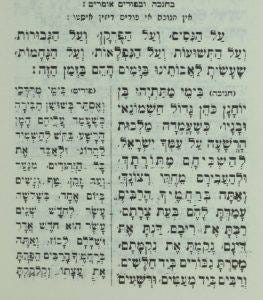
The Al ha-nissim prayer from Siddur Sha’are Tefilah. It omits the standard reference to the “wicked Hellenic government.” (ST00348)
But in order to accommodate their Jewish and Greek identities, they made two noteworthy changes to the prayer book. In the Al ha-Nissim prayer added to the Hanukkah liturgy that refers to the miracles associated with the holiday, the traditional reference to the “wicked Hellenic government” is quietly changed to the “wicked government.”
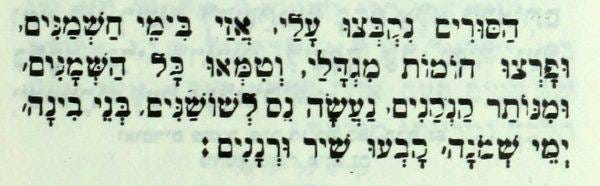
More remarkably, in Maoz tzur (“Rock of Ages”), the popular Hanukkah song, the reference to the enemy as Yevanim (“Greeks”) is replaced by Suriim (“Syrians”). The editors accomplished this clever switch by reference to the historical record. The Seleucids, the Hellenistic empire in control of Judea at the time of the Maccabees, were indeed culturally Greek, but they were geographically based in Syria. Hence the Salonican Jewish leaders could transform the “Syrians” into the Hanukah enemies and thereby more easily embrace Greece as their beloved homeland.
The rabbis adopted a very nuanced attitude toward Hellenism throughout the Greco-Roman period. Many rabbis, beginning from the Mishnaic era, adopted Greek names, co-opted many Greek ideas and even praised the wisdom and beauty of the Greeks in their homiletic teachings.
The early rabbinic writings have only tender things to say about Alexander the Great. You may be familiar with the famous story of the Jewish High Priest going to meet the mighty general as the latter planned an invasion of Judea (this appears both in the Talmud and in Josephus with slight variations). The province of Judea, or “Coele-Syria,” switched hands several times after Alexander’s untimely demise. Whether under the Ptolemaic-Egyptians or the Seleucid-Syrians, there was little persecution under Alexander’s early generals/successors, and in fact, Antiochus I (ancestor of Antiochus Epiphanes- “the mad one”) was a Philosemite by all accounts.
Yannai was one of the great liturgical poets who flourished in the Land of Israel in either the 6th or 7th centuries. For many years little of his poetry was thought to have survived. This changed with the gradual discovery of numerous fragments from the Cairo Genizah.
In 1937, the scholar Menachem Zulai (formerly Billig), published a collection of his poetry recovered from the Genizah http://hebrewbooks.org/39280
In 2010, Dr. Laura Lieber published a selection of Yannai's "Qedushtaot" (a Qedushta was the section of liturgical poetry recited in Eretz Israel congregations during the Sabbath morning services. It was arranged according to the weekly Torah portion) on the book of Genesis.
Many of Yannai's verses are based on Genesis Rabbah- the earliest of the Midrashic corpus. Reading this poetry often gives us Yannai's unique take on a given topic.
This week marks the last portion of the book of Genesis.
The portion of Vayechi tells of the the last days of the patriarch Jacob; the blessings of Jacob to his sons and the eventual mourning and celebration of his life and legacy.
Yannai begins with the tradition cited in Genesis Rabba 48:1 that sickness began with Jacob. This was instituted in order to encourage repentance and to give a person the chance to settle all his matters before he departs from the world
SICKNESS BEGINS WITH JACOB
לנביאי צדק ומהם החילות
ימי תמימים אתה יודע ויום מיתה להם לא מודיע למען אם יחלו ואם יזקינו מלאכתם יתקינו ויורשימו יתקינו כאב ויחידו אשר בטו כי לימות זקנה נטו ודאגו פן יום מיתה יהיה וציוו על בתיהם מה יהיה ותם בעת חלה קרא לבנו ליוסף עד לא יאסף עליו להוסיף תוספת ברכות
אז בזקנה התחיל אב בא בימים להודיע כי זקנה הוא סוף ימים
הן מאיש תם החולי התחיל כי אם יחלה אדם ייחת ויחיל ----- JOSEPH'S OATH TO JACOB. PINING FOR HOME In Genesis 48:1, Joseph is summoned to his father's deathbed where he makes him swear that he will not bury him his Egypt but rather carry him back to Canaan.
זעק תם לנחסך מלטמא ירך הישבעה לי בחותם ירך חלילה לך מלקבור שה בצד חמורים כי אם באשר קנינו מאמורים
The symbolism here is unmistakable. Yannai is of the opinion that Joseph did indeed swear an oath on his circumcision that he will not bury his father "a lamb among asses". Israel is likened to a lamb among wolves and the Egyptians as the "land of asses" in other Midrashic literature.
----- LOVE OF FATHERS TO SONS AND SONS TO FATHERS אב אשר נפשו לך אהבה חלה.. בעבור אהבתך אשר כלהבה נמשך בעבותות אהבה גוע ונטה למיתה
לכן לא התמהמה לעלות ואת בניו עמו להעלות מאהיבך בן הבנים וחלה ולך קרא מכל בנים ניחל בניו ברכה מגדולי בנים כי בני בנים כבנים
Here the theme of paternal love is emphasized. Yannai also emphasizes the great love that Joseph had for his father (and his own two sons).
Jacob gathers his remaining strength to sit up for his beloved son. He calls on Joseph first because he is still his favorite. Joseph honors his father and brings along his sons, Manasseh and Ephraim so they too can receive paternal blessings as "grandson are considered as sons" (a concept found in other early literature and in the Talmud).
----- PREVENTING FRATERNAL JEALOUSY אפרים ומנשה זה וזה צמודים שקולים זה בזה פעמים מנשה ואפרים פעמים אפרים ומנשה לא זה גדול מזה ולא זה גדול מזה מזה תוערץ ומזה תוקדש בסוד צבאותך הקוראים
Although in Genesis 48:1, Jacob famously reverses the order; putting his right hand on the younger Ephraim rather than the first born Manasseh (seemingly continuing a pattern that did not end well last time around), Yannai stresses that there is no inferior or superior brother; both are equal and will be great in their own right. ---- JACOB'S FINAL TESTAMENT. SOMETIMES HIDDEN MUST REMAIN HIDDEN
אותותי יום הבא בלבך סתום ונחבא גם מעוצם רוב חיבה דמיוניות גיליתה לכל אב הניבא
טעמי עניניו יה עילמתה מעיניו כי סוד אשר היה בינך לבניו לגלותו קרא לבניו This reflects many early Midrashic traditions wherein Jacob intended to reveal to his children the secrets of the final redemption but upon seeing the divine presence hovering above him he demurred and offered ethical advice instead (either because he changes his mind or he experienced divinely inspired amnesia) .
מותמם אשר תם נקרא ניניו לפי תומן קרא סובו ואליכם אקרא עת אשר לאדם לא חקרה
יום מובאך מי יכלכל בואו כי כתנור בוער הוא מובאו נכמס באוצרך ונגנז בלבך ולפיך מאז לא גילה לבך יגעת בי נמתה לאיש תם להודיע אחרית אשר מימך נחתם
כמוס וסתום גנוז וחתום טמון וספון עמום וצפון
ליבך לפיך לא גילה וקיצו איך לברייה נגלה מקצת מנו גילית ליעקב המגיד דבריו ליעקב ונם הקבצו ושמעו בני יעקב וישרו לב עקוב ואודיעכם מראשית מה יהיה באחרית ואתה הוא המגיד אחרית מראשית
A fitting ending. Yannai lived in a Byzantine milieu where security and prosperity was hardly assured for the long term. As tempting as it would be to know the meaning of the present and the mysteries of the future, it is better for man to live in the moment and leave the mysteries to the divine.
Post-genesis, the relatively prosperous and secure future of the Israelites will undergo a radical change but it is all for an eventual greater good. Above all, there is hope and faith that whatever happens is divinely ordained.
I am an independent research historian and genealogist and currently working on my first book that will explore the Sephardic origin of many Eastern European Jews.
I hope to correspond on this blog with like minded individuals and learn more about the subjects being discussed as well as impart some of my own knowledge to others.
Please be considerate and give proper credits when reproducing anything from this site. Thank you.